Beat Shooter Night: Rap Battle
HOLA GAMEMusic
4.275.00 Reviews
- Version
- 1.3.3
- Installs
- 1.00M
- Age Rating
- Everyone
Screenshots
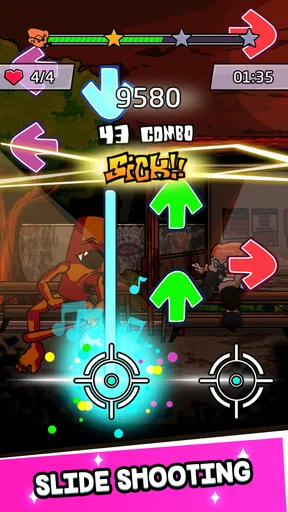
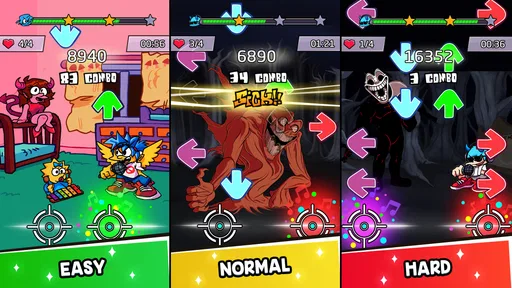
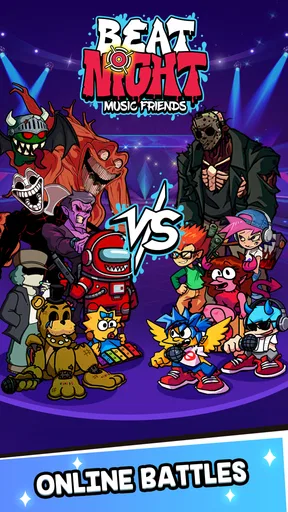
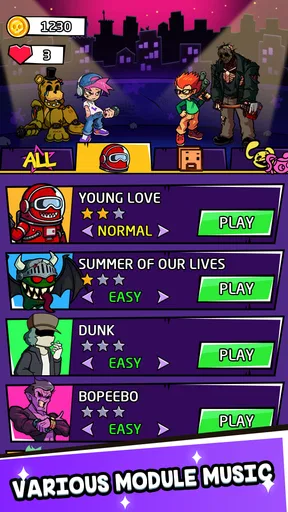
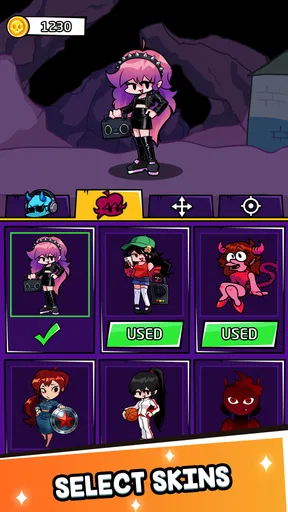
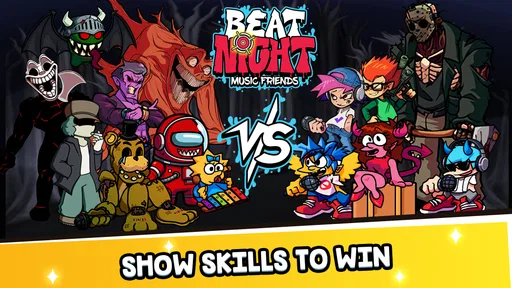
Our Review of Beat Shooter Night: Rap Battle
 Analysis by Appyee
Beat Shooter Night: Rap Battle is the kind of music game I reach for when I want a quick burst of rhythm, aiming, and visual action rather than a deep campaign. It combines rap-battle presentation with beat-based shooting, so the main appeal is immediate: listen, watch the targets appear, and try to keep your timing and aim together. My overall view is positive but specific. This is a lightweight pick-up-and-play game, not a replacement for a full rhythm game or a serious rap simulator.
That distinction matters because the experience is built around short sessions and fast reactions. I found it easiest to enjoy when I treated each attempt as a compact challenge instead of expecting a large story, complex character development, or the long-term depth of a traditional action game. The music category fits its identity, but the shooting element gives it a more active feel than a simple tap-to-the-beat title.
How the rap-battle shooting format feels in practice
The central loop is easy to understand. The game asks me to follow the musical flow while aiming and shooting at what appears on screen. That combination creates a useful tension: concentrating only on the rhythm can make me miss the visual target, while staring only at the target can make my timing feel careless. The best moments come when those two tasks line up and I enter a steady rhythm instead of reacting to every note in a panic.
I would describe the controls as approachable rather than demanding. Someone who has never played a rhythm shooter can understand the basic idea quickly, while a more experienced player can still try to improve consistency. The music gives each action a sense of momentum, and the rap-battle framing helps the game feel more distinctive than an anonymous target shooter.
One practical tip is to avoid playing with the sound turned down during the first few attempts. The visual cues are important, but the beat can help me anticipate the next action instead of waiting until the target is already in front of me. After getting familiar with a section, I can focus more on visual timing and use the audio as confirmation. That change in attention is a small but useful way to make the game feel less frantic.
Another helpful habit is to keep my movements economical. I get better results when I make deliberate taps or swipes toward the target instead of constantly moving around the screen. In a game that combines aiming with music, unnecessary movement can break concentration. The goal is not simply to act quickly; it is to make the correct action at the correct moment.
The rap theme also affects who will connect with it. Players who enjoy energetic presentation and music-led action will probably understand the appeal immediately. Those who prefer quiet puzzle games, realistic shooting, or elaborate rhythm notation may find the style too direct. It is designed to make the player feel active within a song, not to teach musical theory or reproduce the full complexity of an instrument.
Where the game is strongest
Its biggest strength is accessibility. Beat Shooter Night: Rap Battle does not ask me to learn a complicated ruleset before I can have fun. I can open it, understand the target-and-beat idea, and begin testing my timing almost immediately. That makes it suitable for a short break, a commute with headphones, or a quick change of pace between more demanding games.
The shooting layer gives the rhythm format a little more physical involvement. In many music games, the challenge is mainly about pressing the correct button at the right instant. Here, the act of aiming adds a visual decision, which can make a familiar beat feel more active. It is a good fit for players who enjoy rhythm games but want something with a touch of arcade pressure.
I also like that the game’s concept is easy to explain to another person. If a friend asks what I am playing, “a rap-themed game where I shoot along with the beat” communicates the idea better than a long description. That clarity is valuable in a crowded mobile market, where many music games can feel interchangeable at first glance.
The game is free to download, which lowers the barrier to trying it. Optional in-app purchases range from ninety-nine cents to two dollars and ninety-nine cents per item, so the payment model is not the same as a single upfront premium purchase. I would advise new players to spend time with the free experience first and decide whether the extra items genuinely improve their sessions. The most important question is whether the core rhythm-and-aim loop already feels satisfying before paying for anything.
Its audience reach is also broad on paper. The game is marked for Everyone, and it runs on Android seven or later. That makes it a practical option for people using older compatible devices, although the experience can still depend on how comfortably the device handles touch input and audio. For the best results, I would close demanding background apps and use headphones when possible, especially if timing feels inconsistent.
The developer is HOLA GAME, and the current version is 1.3.3. I mention the version because players sometimes install a music game expecting a completely different style of play after seeing only its short description. Here, the important expectation is a compact arcade rhythm experience centered on aiming and shooting, not a broad music library or a full competitive platform.
Small techniques that make sessions more enjoyable
My first concrete recommendation is to use the opening attempts as calibration rather than as tests of skill. Pay attention to whether the visual target or the sound feels slightly ahead of the action. If the game feels difficult immediately, the problem may be attention or device response rather than lack of rhythm. Playing in a quiet place and avoiding interruptions makes a noticeable difference because the game depends on split-second focus.
Second, I would play in short sets instead of repeating the same section endlessly. After several failed attempts, frustration can make me rush, and rushing damages both aim and timing. A brief pause resets my attention. This is especially useful on a phone, where a quick session can easily turn into repetitive tapping without any real improvement.
Third, I would judge progress by control rather than by one lucky high score. A successful run that feels calm and repeatable is more meaningful than a single result achieved through frantic reactions. This approach helps reveal whether I am actually learning the pattern or simply surviving it. It also makes the game more suitable for casual improvement, since I can finish a session with a clear sense of what to practice next.
A less obvious use case is using the game as a short focus exercise. I would not call it a music lesson, but the need to coordinate sound, sight, and touch can provide a clean mental reset after reading or working. The limitation is that it is stimulating rather than relaxing. If I want something peaceful before bed, the bright action and rapid timing may be the wrong choice.
It can also work well as a social pass-around game, provided everyone understands that the appeal is immediate reaction rather than a large multiplayer system. Handing a phone to a friend and comparing how naturally each person follows the beat is simple and entertaining. I would not choose it for a long group event that needs elaborate shared progression, but it is effective as a quick challenge.
The main weakness: limited depth for long-term players
The same simplicity that makes the game approachable can limit its staying power. Once I understand the basic rhythm-shooting loop, the experience depends heavily on whether I enjoy repeating it and refining my timing. Players looking for a deep progression system, a large narrative, or a highly customizable music experience may feel that the concept runs out of room sooner than expected.
This is not necessarily a flaw for its intended format. Mobile games often work best when they respect short sessions, and this one seems designed around that idea. Still, I would be cautious about recommending it as someone’s only music game. A more substantial rhythm title is likely a better choice for players who want extensive song variety, detailed performance statistics, or a long-term mastery path.
The shooting element may also divide players. I enjoy the extra sense of movement, but someone who wants pure rhythm accuracy might see aiming as a distraction. Conversely, action-game fans who expect precise combat may find the shooting too closely tied to the beat to deliver the depth of a dedicated shooter. The game sits between those categories, and that middle ground is both its identity and its limitation.
There is also a learning curve in deciding what to watch. New players may instinctively focus on the target and lose the musical pulse, or listen to the beat while failing to position accurately. That can make the first sessions feel more chaotic than expected. The solution is not complicated, but it requires patience: slow down mentally, identify the recurring visual cues, and let the music guide the pace.
The purchase structure deserves a similarly measured view. Free access is convenient, but optional items can change how a player thinks about progression and value. I prefer to keep spending separate from performance: if I buy anything, it should be because I want an extra convenience or presentation element, not because I feel pressured to overcome a basic control problem. That is good advice for any free mobile game, and it is particularly relevant here because the core appeal is easy to test without committing money.
Who should install it, and who should choose something else
I would recommend this game to someone who likes music-driven arcade games, wants a fast session, and enjoys combining timing with touch aiming. It is especially suitable for players who find ordinary tap rhythm games a little passive but do not want the complexity of a full action title. The Everyone rating also makes it an approachable choice for a broad audience, though individual comfort with rapid visual action will still vary.
Imagine having ten minutes before an appointment. I could put on headphones, play a few rounds, and stop without needing to remember a complicated story or manage a large inventory. That is where the game makes the most sense. It gives the break a clear activity and a small skill goal: improve timing, aim more cleanly, and finish a run with fewer mistakes.
I would be less likely to recommend it to a player who mainly wants a curated music collection, realistic rap battles, or an extensive competitive ranking system. I would also steer away players who dislike repeated attempts, because the satisfaction comes from learning the timing and trying again. If the idea of replaying a short pattern to improve accuracy sounds boring, the game may feel thin rather than focused.
Compared with a conventional rhythm game, this title feels more visually active and less musically pure. Compared with a standard mobile shooter, it is more about coordination and tempo than combat depth. That comparison helps set the right expectation: it is not trying to win both categories outright. Its best quality is the unusual overlap between them, and its weakest point is that players seeking the full depth of either category may want a specialist alternative.
The install base suggests that the concept has reached a substantial mobile audience, with over one million installs, while its average rating is 4.2 from around one thousand nine hundred ratings. I see those figures as a useful sign of interest rather than a guarantee that every player will enjoy it. The game’s appeal is quite specific, so personal preference for rap presentation, rhythm challenges, and touch aiming matters more than popularity alone.
My final recommendation
Beat Shooter Night: Rap Battle succeeds when I treat it as a focused arcade music game. Its rap-battle identity, beat-led shooting, accessible controls, and short-session structure give it a clear purpose. I like that I can understand the premise quickly and still have room to improve my timing through practice. The free entry point makes experimenting easy, and the modest optional purchase range is manageable as long as I decide carefully what I actually want.
At the same time, I would not oversell its depth. The game is not the right choice for a player searching for a long campaign, a sophisticated music-training tool, or a serious shooter. Its repetition may become noticeable, and the combination of aiming and rhythm will not suit everyone. Those are important limitations, but they do not undermine the game’s central idea.
My verdict is that Beat Shooter Night: Rap Battle is worth trying if you want a free, energetic music game that turns rhythm into a quick aiming challenge. I would install it for short breaks, casual competition with friends, or a change from ordinary tap-to-the-beat games. I would skip it only if I already know that I need deep progression or highly precise musical gameplay. For the right player, its simple formula is not a weakness; it is exactly what makes one quick round easy to start.
Verdict
Strengths of Beat Shooter Night: Rap Battle
- Fast-paced rhythm gameplay that is easy to learn
- Stylish night-themed visuals fit the rap battle atmosphere
- Short rounds make it suitable for quick gaming sessions
- Varied tracks help keep the experience from feeling repetitive
- Simple controls work well on touchscreen devices
Limitations of Beat Shooter Night: Rap Battle
- Some songs or features may require in-app purchases
- Difficulty can rise sharply in later stages
- Repeated play may feel repetitive for rhythm-game veterans
- Visual effects can make notes harder to follow on small screens
- May consume noticeable battery during longer sessions
Other Releases by HOLA GAME
View All
Music Beat Night Show
Music4.6

Full Mod Rap Battle Night
Music4.1

Rap Beat Battle - Full Mods
Music4.2

Blade Night : Rhythm Saber
Music4.8
Similar Picks in This Category
View All
Tiles Hop Music & Ball Game
AMANOTES PTE. LTD.4.3

Magic Tiles 3™ - Piano Game
AMANOTES PTE. LTD.4.6

Real Piano
Bilkon3.7

Piano Game: Classic Music Song
Dream Tiles Piano Game Studio4.0

Smash Colors: Music Ball Rush
BADSNOWBALL HONGKONG LIMITED4.2

Piano Music Go-EDM Piano Games
Joy Journey Music Games4.5
Frequently Asked Questions
What is Beat Shooter Night: Rap Battle?
Beat Shooter Night: Rap Battle is a rhythm-action game that combines music-based tapping with shooting mechanics and rap-themed battles. Players generally follow the beat, aim at incoming targets, and complete songs while trying to maintain accuracy and combos. Its night-time visual style and energetic soundtrack are designed for short, fast-paced sessions, although the overall experience can vary depending on the device and game version.
How do you play Beat Shooter Night: Rap Battle?
Gameplay usually requires you to tap, swipe, or shoot targets in time with the music while avoiding missed notes and obstacles. The better your timing and accuracy, the higher your score and combo become. Before downloading, remember that the controls may feel demanding at first, especially during faster tracks. Headphones can make the rhythm easier to follow, but the game should also remain playable using your device’s speakers.
Is Beat Shooter Night: Rap Battle free to download and play?
The game may be available as a free download, but free access does not always mean that every feature is unlocked without limitations. Depending on the version, you may encounter advertisements, optional purchases, energy systems, locked songs, or other progression restrictions. It is a good idea to check the official store listing for the current price, in-app purchase details, and whether an internet connection is required for specific content.
Does Beat Shooter Night: Rap Battle work offline?
Some parts of Beat Shooter Night: Rap Battle may work without a permanent internet connection, particularly previously loaded songs or basic gameplay modes. However, advertisements, updates, online rankings, cloud data, and newly downloaded content may require access to the internet. If offline play is important to you, test the game after disabling mobile data and Wi-Fi, and check whether your progress and available tracks remain accessible.
What devices are compatible with Beat Shooter Night: Rap Battle?
Compatibility depends on the Android or iOS version, available storage, memory, and the developer’s current technical requirements. Rhythm games with animated effects can perform poorly on older phones, causing delayed input, stuttering, or audio synchronization problems. Before installing, review the official store requirements and make sure your device has enough free space. Closing background apps and lowering visual settings, when available, may improve performance.
Play our best games!


